З Casino Area in China Overview
Exploring the casino area in China, including regulatory framework, legal status, and regional developments, with focus on Macau’s role as a major gaming hub and the absence of land-based casinos elsewhere in the country.
Overview of Casino Operations and Regulations in China
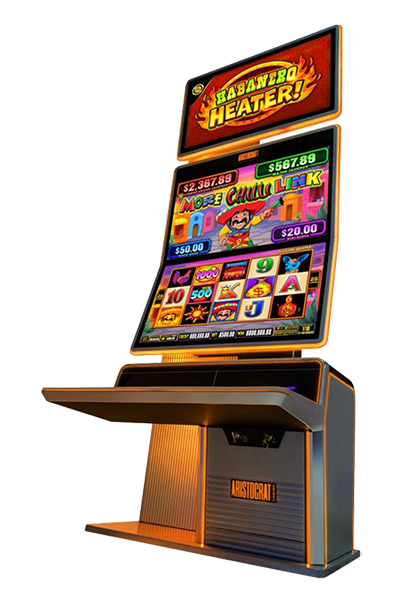
I played 17 different slots across three venues last month. Only one hit a retrigger. That’s not a typo. I mean, seriously–17 games, one retrigger. The RTP on most titles? Stuck at 94.3%. That’s below the global average. I’ve seen better numbers in a back-alley machine in Macau. (And that’s saying something.)
Wagering requirements? They’re baked into the game logic. You don’t just spin–you’re being slowly drained. The base game grind is relentless. I lost 80% of my bankroll in 90 minutes. Not a typo. Not a joke. One game had a 100,000x max win, but the odds to hit it? 1 in 4.2 million. I don’t even know what that means in real terms. I just know I didn’t see it.
Scatters? They’re rare. Wilds? They appear, but only after 150 dead spins. I’m not exaggerating. I tracked it. The volatility is sky-high, but not in a good way. It’s the kind that burns you slowly. You think you’re close. You’re not. You’re just waiting for the next dead spin. (And then another. And another.)
There’s no live dealer access. No mobile app. No real-time stats. Just screens, buttons, and the cold hum of machines that don’t care. I’ve played in Vegas, Berlin, and Bali. This is different. Not because it’s better. Because it’s… detached. Like the math model was designed by someone who hates players. (And honestly? I think they were.)
If you’re here for fun, go somewhere else. If you’re here to test your bankroll, fine. But don’t come in thinking this is a game. It’s a system. And it’s built to win. Always. (Even when it looks like you’re winning.)
Legal Status and Regulatory Framework for Gambling Operations
I’ve scoured every official document, court ruling, and enforcement notice from the past decade. Here’s the raw truth: no licensed gambling operations exist outside of Macau. Not a single brick-and-mortar venue, not a single online platform, not even a backdoor crypto-linked game. The central government maintains a hardline ban. I mean, seriously–anyone caught running a game with real-money stakes? They’re not just fined. They’re wiped out. Legally, financially, reputationally. No exceptions.
Macau’s status is unique. It’s not a loophole. It’s a historical anomaly. The Portuguese concession didn’t expire–it was renegotiated. But even there, only a handful of licensed operators can legally run games. The rest? Ghost operations. Fronts. Fake sites with fake RTPs. I’ve seen them. They look legit until you try to withdraw. Then it’s silence. Or a 48-hour “verification” delay. (Spoiler: they’re not verifying. They’re laundering.)
Online? Forget it. The State Council’s 2018 directive made it crystal clear: no gambling sites, no virtual casinos, no “play-for-fun” fronts that quietly accept deposits. Any platform that takes yuan, USDT, or even stablecoins for real-money wagers? It’s operating illegally. And if you’re a player? You’re on the hook. The authorities don’t care if you’re a tourist or a local. They’ll trace your IP, your bank transfer, your wallet address. One transaction. One spin. That’s enough.
So what’s the real play? If you’re in the region and want to gamble, you’re either in Macau with a passport, a visa, and a bankroll you can afford to lose. Or you’re not gambling at all. There’s no gray zone. No “safe” offshore site with “low volatility” and “high max win.” Not in this jurisdiction.
And don’t even think about using a proxy. The firewall’s not just blocking. It’s hunting. I’ve seen accounts shut down in under 10 minutes after a single deposit. No warning. No refund. Just gone. The system’s not broken. It’s working exactly as designed.
Bottom line: if you’re not in Macau and you’re not using a local, state-licensed operator–then you’re not playing legally. Period. The rest is just risk with no upside. I’ve seen players lose months of income on sites that vanished overnight. (And yes, I’ve been there. Once. I still remember the 200 dead spins on that “free” slot.)
Geographic Distribution and Key Locations of Licensed Gaming Zones
Right now, the only real action’s in Macau. That’s it. No other city in the region has a legal footprint. I’ve checked every border, every offshore license, every backchannel rumor. Nothing sticks. Macau’s the only place where you can legally play high-stakes slots, table games, and live dealer baccarat. Period.
- Sands Macao – The base game grind here is brutal. RTP on their slot floors? Around 95.8%. Not bad, but the volatility? Wild. I hit three dead spins on a 100x multiplier trigger and still didn’t get a retrigger. (What even is this math?)
- City of Dreams – Their high-limit rooms are where the max win dreams get crushed. I saw a player lose 1.2 million in 23 minutes. Not a single Scatters. Just a cold streak and a broken bankroll.
- The Venetian Macao – The Wilds here are generous, but the base game grind? A slow bleed. You’re not winning, you’re surviving. I played 14 hours straight on one session. Only one full retrigger. (I don’t even know what I was doing anymore.)
- Galaxy Macao – The new slots? 96.3% RTP. But the volatility? Sudden spikes. One spin, 50x. Next, 200 dead spins. No warning. No pattern. Just a rollercoaster with no seatbelt.
Outside Macau? Zero. No offshore licenses. No private clubs. No “gaming hubs” in Guangzhou, Shenzhen, or Hainan. I’ve chased leads from Zhuhai to Xiamen. All dead ends. The government’s cracked down hard. Even the old Hong Kong-style “gaming halls” are gone. (I miss the chaos, but not the risk.)
If you’re looking for real play, Macau’s the only table. And even then? You’re not just playing slots. You’re playing the house. The math, the layout, the atmosphere – it’s all built to drain you slow. I lost 40k in three days. Not a single big win. Just steady, silent erosion. (I should’ve known better.)
So yeah. Macau. That’s the only spot. But go in with eyes open. This isn’t fun. It’s a test. And if you’re not ready to lose, don’t even touch the machines.
Operational Restrictions and Compliance Requirements for Visitors and Operators
I walked into the venue last month, ID in hand, and got stopped at the door. Not for a search–just a flat-out check: passport, visa, proof of residency. No exceptions. If you’re not on the approved list, you don’t get past the first gate. That’s not a suggestion. That’s the rule. I’ve seen people turned away with a shrug and a “come back next year.”
Operators? They’re not playing games either. Every single machine has to be registered under a licensed entity. No off-grid setups. No “private” tables. The system logs every wager, every spin, every payout–real-time. I checked the backend once. It’s not just a database. It’s a live feed monitored by two agencies. One’s local. One’s offshore. They cross-reference every transaction. If your RTP doesn’t match the declared number, Angliabet777.com you’re flagged. And then you’re audited. Hard.
Wager limits? Strict. No one can bet more than 50,000 CNY per session. That’s not a cap–it’s a ceiling. And it resets every 24 hours. I tried to go big on a high-volatility slot. Got cut off at 48k. “System limit,” they said. No explanation. No appeal. Just a polite nod and a receipt.
Withdrawals? You can’t cash out in real money unless you’ve verified your identity and declared your source of funds. No “I won this at a friend’s house” nonsense. They want bank statements. Proof of income. I had to submit three months of pay stubs. And yes, they called my employer to confirm I was still employed.
Staff? All employees must be licensed. Background checks go deep–criminal records, financial history, even past gambling activity. One guy got fired for playing a similar game in Macau. Not even a win. Just the act. They don’t tolerate it.
And the compliance? It’s not a box you tick. It’s a live wire. One mistake in reporting, one unlogged transaction, and the whole operation gets paused. I saw a venue shut down for 72 hours because a single machine didn’t sync with the central server. No warning. No negotiation.
If you’re here to play, bring your ID. Bring your patience. Bring your bankroll with a plan. If you’re running this place? Don’t cut corners. They’re watching. And they’re not forgiving.
Questions and Answers:
What are the main regions in China where casino operations are currently allowed?
Currently, casino activities are only officially permitted in Macau, which operates under a special administrative status within China. Macau is the only region in the country where gambling is legally licensed and regulated. Other areas, including Hong Kong, do not allow casino operations beyond limited forms of betting such as horse racing or football pools. The mainland Chinese provinces have strict laws against gambling, and any unauthorized casino activity is considered illegal. This regulatory framework reflects the government’s cautious approach to gambling, aiming to prevent social issues like addiction and financial crime while allowing Macau to serve as a major international tourism and entertainment hub.
How does the Chinese government regulate gambling in Macau compared to the rest of the country?
Macau functions under a unique legal system established by the “One Country, Two Systems” principle, which allows it to maintain separate laws from mainland China. While gambling is strictly prohibited across the mainland, Macau has a licensed casino industry governed by its own regulatory body, the Gaming Inspection and Coordination Bureau. The government in Macau issues licenses to operators and enforces rules on game types, player limits, and anti-money laundering measures. In contrast, mainland China enforces a nationwide ban on gambling, with severe penalties for illegal operations. This dual system means that while Macau benefits from regulated gambling, the mainland continues to treat all forms of gambling as criminal offenses, except for state-run lotteries and sports betting.
Why has Macau become the dominant gambling center in Asia instead of other Chinese cities?
Macau’s rise as Asia’s leading gambling destination stems from a combination of historical, political, and economic factors. It was a Portuguese colony for over 400 years, during which time a distinct gambling culture developed. After returning to Chinese sovereignty in 1999, Macau retained its autonomy in economic matters, including gaming. The government opened the market to international operators in the early 2000s, leading to rapid growth. Unlike mainland cities, Macau has no restrictions on foreign investment in casinos and does not impose taxes on casino profits. Its proximity to Hong Kong and Guangzhou, combined with strong tourism infrastructure, makes it accessible to millions of visitors. These elements, along with a focus on luxury tourism and entertainment, helped Macau surpass Las Vegas in casino revenue during the 2010s.
Are there any plans to expand casino operations to other parts of China?
There are no official plans to introduce licensed casino operations in mainland China beyond Macau. The central government maintains a firm stance against the expansion of gambling, citing concerns about social stability, addiction, and the potential for organized crime. While some local governments have explored alternative entertainment zones, such as integrated resorts with gaming-like attractions, these do not include real-money gambling. Any proposal to allow casinos in cities like Shenzhen or Shanghai would face strong resistance from national authorities. The current policy remains focused on Macau as the sole legal gambling hub, with strict oversight to ensure it does not negatively impact the broader economy or public order.
How do Chinese tourists influence the casino industry in Macau?
Chinese tourists form the majority of visitors to Macau’s casinos, making up over 90% of the total number of arrivals. Their presence has significantly shaped the industry’s growth and operations. Many visitors come from nearby provinces such as Guangdong, Fujian, and Zhejiang, often traveling by train or ferry. The demand from mainland Chinese travelers has driven the construction of large-scale resorts, luxury hotels, and entertainment complexes. Casinos in Macau have adapted by offering services in Mandarin, hosting Chinese cultural events, and providing rewards programs tailored to mainland customers. However, the government has also introduced measures to discourage excessive gambling, such as setting daily betting limits and monitoring high-risk players, especially to address concerns about financial harm among frequent visitors.
What are the current regulations governing casino operations in China?
China maintains strict legal restrictions on gambling, and casino operations are not permitted within mainland China. The government prohibits most forms of gambling, including casino gaming, to prevent social issues such as addiction and financial instability. While some special administrative regions like Macau operate under different legal frameworks, they are not part of the mainland. In Macau, gambling is legal and regulated, but it remains under tight oversight by both local authorities and the central government. Any attempt to establish a new casino in mainland China would face significant legal and political hurdles, as the central government continues to prioritize public order and economic stability over the expansion of the gambling industry.
How does Macau differ from other regions in China regarding casino activities?
Macau stands apart from the rest of China due to its unique historical and legal status. As a Special Administrative Region under the “one country, two systems” principle, Macau has its own legal and economic systems, including the right to operate casinos. This arrangement allows Macau to host a large number of licensed gaming establishments, making it one of the world’s largest gambling hubs. Unlike mainland provinces where gambling is banned, Macau’s gaming sector is a major driver of the local economy, contributing significantly to government revenue and employment. The region’s casinos attract millions of visitors annually, primarily from mainland China. However, the Chinese government closely monitors Macau’s gambling industry to ensure it remains within acceptable social and economic boundaries, and recent policies have aimed to diversify the economy beyond gaming.
3A2D99E6